
grown ups need screentime time boundaries too

Screen time conversations are almost entirely focused on children, but adults are struggling just as much, and nobody is talking about it. The average person spends over 6 hours a day on screens regardless of age, and the research is clear that no brain is truly immune to the addictive design of modern technology. This essay makes the case that screen time boundaries aren't just for kids, and explores what it actually looks like for adults to build a healthier relationship with their phones on their own terms.
The evidence is in and we've collectively come to the conclusion: screentime is harmful for kids.
We're seeing a genuinely promising rise in low-screen and screen-free childhoods. More families are waiting before handing their children smartphones and are exploring alternatives like dumbphones and landlines. It's exciting progress.
Now, answer this question for me: when we turn 18, are we suddenly capable of handling smartphones, social media, and the relentless barrage of digital stimuli? Do we magically have a healthy relationship with technology now that we have completed that 18th trip around the sun?
Let's push it further. Research suggests our brains aren't fully formed until around age 25. Are we ready then? At what point does any brain become capable of handling the slot machine-like assault on our nervous system? Even the elderly aren't immune to the addictive pull of screens.
Worldwide, people spend an average of 6 hours and 38 minutes per day on screens: nearly half of their waking hours. Half of their lives. Does this really sound like a problem that's only affecting children?
It’s time we change the conversation. Screen time boundaries aren't just for kids. They're for all of us.
imagine a world
Imagine being able to have a real conversation with a friend or family member and no one glances at their phone. Your attention isn't being pulled in a hundred different directions. You can unwind without scrolling through strangers' lives. You can stand in line or sit in a waiting room without compulsively opening an app. The default is to fill your day with offline activities, using technology as a tool, not the other way around.
We can have more fulfilling lives. We just have to take back control.
When adults rein in children's screen time, the children have the benefit of someone there to guide them toward healthier boundaries. Grown-ups don't have that. And it can feel genuinely daunting to break a habit that is so deeply woven into your daily life.
Going cold turkey, tossing the smartphone and buying a flip phone… it isn't realistic for most people. Adults still need the tools that their phones provide: maps, banking, podcasts, online grocery shopping. The goal isn't to reject technology. It's to learn to coexist with it on your own terms.
that's what I'm here for
I started Break Free as a Substack, a way to document my own journey as I worked to untangle my own unhealthy digital habits. It grew into a detox program. And now it's becoming a brand in its own right.
Break Free from the Internet now has its own home at breakfreefromtheinternet.com.
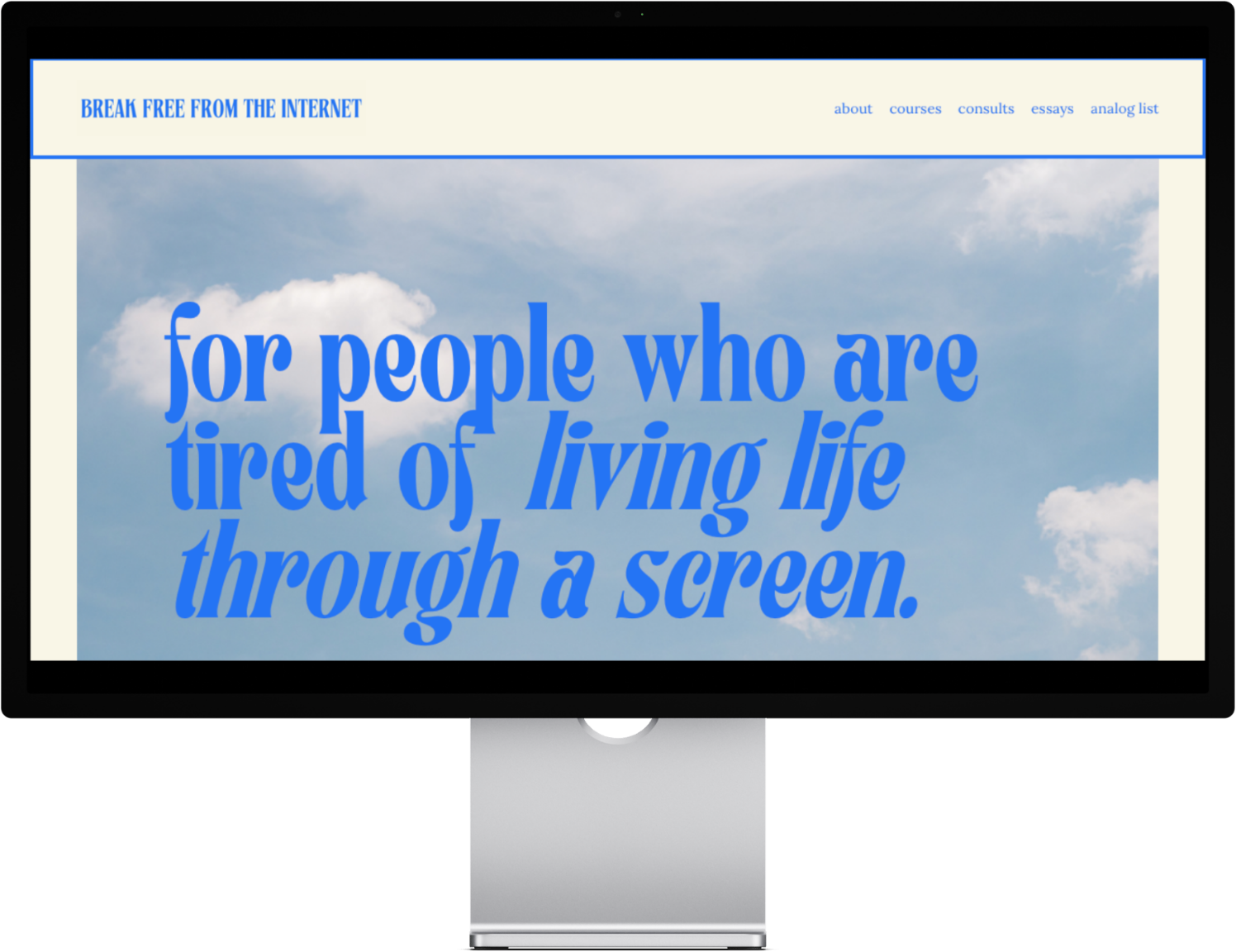
If you've been reading for a while, nothing changes. Essays will still land in your inbox just like always. But the new site gives me space to offer more:
Rewire Your Digital Habits: the og 35-day detox program to reset your relationship with technology from the ground up
Break Free from Scrolling: a new course focused specifically on quitting social media
1:1 consulting: direct support if you want a more personal approach
The Quick and Dirty Guide to Spending Time Offline: a free no-nonsense place to start
Grown-ups need screen time boundaries too. And if you need some help building yours, that's exactly what Break Free is here for.